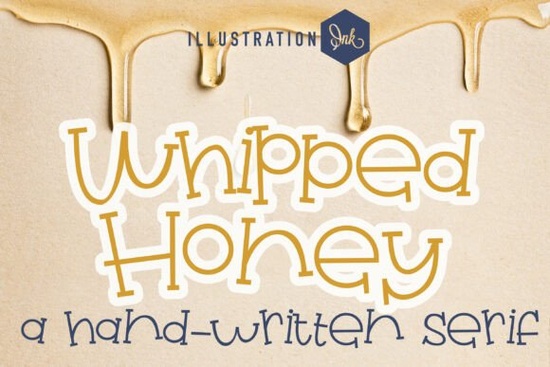
If you're looking for a clean, hand-drawn script font that feels both warm and intentional like something you’d see on a small-batch honey label or a quiet café’s chalkboard menu you’ll likely appreciate Whipped Honey Family Font. It’s not overly decorative or fussy. Instead, it balances lightness and structure: fine monoline strokes, open letterforms, and subtle hand-drawn serifs that give it quiet confidence. It works especially well when you want your text to feel personal but still polished think organic skincare branding, minimalist food packaging, or Instagram story overlays for lifestyle creators.
Who is Whipped Honey designed for?
This isn’t a font built for loud headlines or high-contrast posters. It shines in quieter, considered spaces where tone matters as much as legibility. Independent makers who sell raw honey, cold-pressed juices, or handmade soaps often choose Whipped Honey because its gentle geometry reads as natural and trustworthy not generic or mass-produced. Print-on-demand sellers also find it useful for greeting cards and wall art where soft sophistication stands out without shouting.
It pairs well with simple sans-serifs (like Montserrat Light or Inter) or even other low-contrast scripts but avoid pairing it with heavy, ornate fonts. The contrast can feel unintentional rather than intentional.
What makes it different from other handwritten fonts?
Many script fonts lean into either full-on brush energy or tight, formal calligraphy. Whipped Honey sits comfortably in the middle. Its square counters (the open space inside letters like “o” or “e”) are wider than average, which improves readability at smaller sizes especially important for product labels or mobile-first social graphics. The serifs aren’t dramatic; they’re faint, almost implied, like a whisper of intention behind each stroke.
You’ll notice it doesn’t rely on swashes or alternate characters to feel expressive. That’s by design. If you’ve tried fonts like Chunky Chaos (which leans playful and bold) or Mango Bloom (more lush and flowing), you’ll see how Whipped Honey offers a quieter alternative one that supports your message instead of competing with it.
Where does it work best in real projects?
- Labels & packaging: Works on amber glass jars, kraft paper tags, or matte-finish soap wraps especially when paired with neutral color palettes (cream, sage, oat, charcoal).
- Cafe or bakery menus: Reads clearly on printed menus or digital displays without feeling stiff or corporate.
- Social media overlays: Stands out on light lifestyle photos think flat lays of ceramic mugs, linen napkins, or fresh fruit without overwhelming the image.
- Small business logos: Scales well down to favicon size, and its even weight holds up in embroidery or foil stamping.
It’s worth noting that while it’s a script font, it’s not meant for long paragraphs. Use it for headings, short phrases, or accent text not body copy. For longer text blocks, pair it with a friendly, highly readable sans-serif.
How does it compare to similar fonts on Creative Fabrica?
If you like the relaxed-but-precise vibe of Whipped Honey, you might also explore Summer Beauty which has slightly more bounce and warmth or Sunny, a bit airier and more open. All three sit in that thoughtful, modern-minimalist lane, but Whipped Honey stands out for its consistency and restraint. It doesn’t try to do everything; it does one thing well: add calm, confident handwriting to designs that value authenticity over flash.
For reference, you can view the full family including stylistic alternates and OpenType features on Whipped Honey Family Font directly on Creative Fabrica.
A quick checklist before you use it
- ✅ Test it at your smallest intended size especially for labels or embroidery.
- ✅ Check spacing between words and letters; light fonts sometimes need slight tracking adjustments.
- ✅ Avoid using all caps it’s designed for sentence case and title case only.
- ✅ Pair it with typefaces that share its low contrast and even rhythm.
- ✅ Keep file exports clean: use vector formats (SVG, EPS) for logos, and WOFF2 for web use if self-hosting.
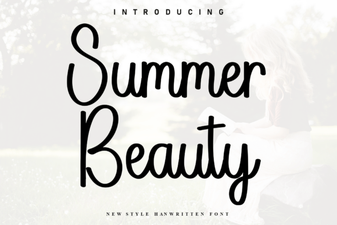 Summer Beauty Font: Creative Design Ideas
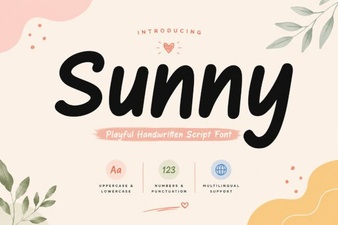 Sunny Font: Bright, Friendly Typography for Creative Projects
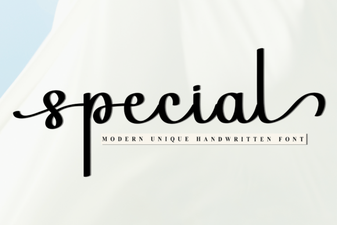 Special Fonts for Creative Design Projects
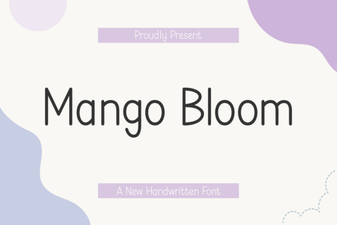 Mango Bloom Font: Creative Design & Project Ideas
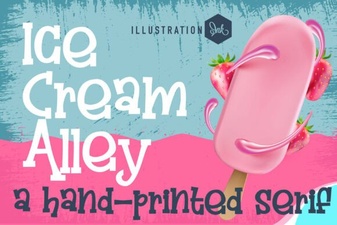 Ice Cream Alley: a Playful Family Font
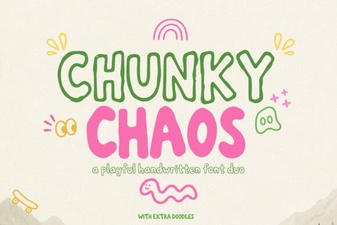 Chunky Chaos Font: Bold Design & Creative Projects