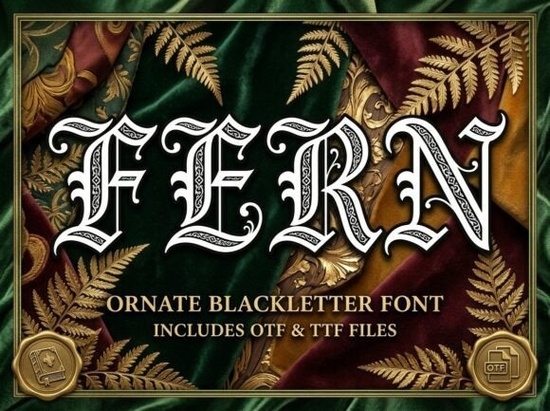
If you’re looking for a blackletter font that feels both authentically medieval and ready for modern use like on a craft brewery label, a fantasy book cover, or custom tavern signage Fern Font is worth your attention. It’s not just another gothic typeface. Its sharp Textura-style letterforms, delicate internal filigree, and dramatic spiked terminals give it presence without sacrificing readability at larger sizes. Designed with care for both historical accuracy and practical application, Fern bridges cathedral manuscripts and today’s indie design needs.
What makes Fern different from other blackletter fonts?
Most decorative blackletter fonts lean heavily into either extreme density (hard to read) or exaggerated ornamentation (hard to pair). Fern avoids both traps. Its weight is consistent and substantial not so heavy it collapses at small sizes, but bold enough to command attention on packaging or signage. The calligraphic flourishes are intentional, not random: each swirl and terminal serves the rhythm of the letterform. You’ll notice subtle details like tapered joins and fine interior lines details that matter most when printing on textured paper or engraving onto wood or metal.
This isn’t a “one-trick” font. While it shines in dark-fantasy or historic-themed projects, it also works well in contexts where contrast and gravitas matter think luxury stationery, limited-edition vinyl sleeves, or even high-end wedding invitations with a gothic twist. Because it includes full Latin character support and OpenType features like stylistic alternates and ligatures, it adapts gracefully across languages and design systems.
Where does Fern work best in real projects?
Designers and small business owners tell us Fern performs especially well in these scenarios:
- Craft brewery labels Its strong vertical stress and regal tone help brands stand out on crowded shelves, especially for stouts, porters, or barrel-aged releases.
- Tavern or apothecary signage Whether laser-cut from walnut or printed on aged kraft paper, Fern holds up beautifully at scale and adds instant atmosphere.
- Book spines and covers Particularly for historical fiction, folklore collections, or occult nonfiction, it conveys authority and timelessness without feeling costumed.
- Social media headers and merch designs Paired with a clean sans-serif for body text, Fern gives Instagram banners or enamel pin mockups a distinctive, memorable voice.
It’s also popular among print-on-demand sellers who create themed greeting cards or wall art especially those targeting niche audiences like reenactors, litRPG fans, or gothic romance readers. Because it’s optimized for both digital display and high-res print output, you won’t need separate versions for web and physical goods.
How to use Fern without overdoing it
Like any strong personality font, Fern works best when given room to breathe. Avoid setting full paragraphs in it stick to headlines, logos, short quotes, or single-word accents. Try pairing it with a neutral, highly legible sans-serif (like Montserrat, Inter, or even a soft grotesk like Poppins) for body copy. That contrast lets Fern do its job without overwhelming the layout.
You’ll also want to test spacing carefully. Kerning pairs like “To”, “We”, or “Th” often benefit from manual adjustment Fern includes built-in OpenType kerning, but optical alignment still matters depending on size and medium. If you’re using it for embroidery or vinyl cutting, simplify flourishes where needed (many users turn off alternate glyphs for cleaner outlines).
Is Fern compatible with common tools?
Yes. It’s delivered as OTF and TTF files, so it works in Adobe Creative Cloud apps (Photoshop, Illustrator, InDesign), Affinity Suite, Cricut Design Space, Silhouette Studio, Canva (uploaded via brand kit), and most desktop publishing or cutting software. No web license is included by default, but Creative Fabrica offers extended licensing options if you plan to use it on live websites or SaaS platforms.
If you’d like to see how Fern compares to other historically inspired typefaces, you might also explore Fern Font alongside complementary options like Gothic Script Font or Medieval Display Font. Just remember: Fern’s balance of detail and structure makes it unusually versatile within the blackletter category.
Before downloading, take a look at the Fern Font specimen page it shows real-life usage examples, glyph coverage, and suggested pairings. You’ll get a clearer sense of whether its rhythm matches your project’s tone.
Quick checklist before you use Fern:
- ✅ Use it for short, impactful text not long blocks
- ✅ Pair it with a clean, low-contrast sans-serif for balance
- ✅ Test print or cut at your intended final size first
- ✅ Check licensing if using beyond personal or standard commercial use
- ✅ Explore OpenType alternates they add nuance without extra effort
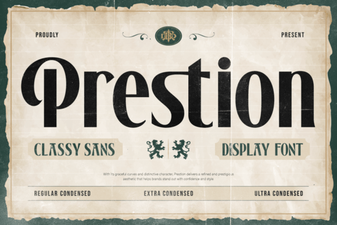 Prestion Font: Elegant & Versatile Design Tool
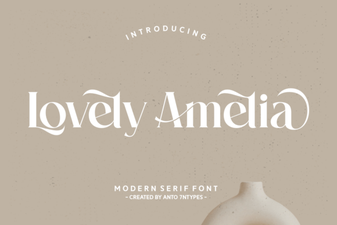 Lovely Amelia Font: Elegant Design & Creative Uses
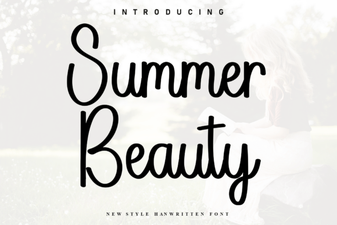 Summer Beauty Font: Creative Design Ideas
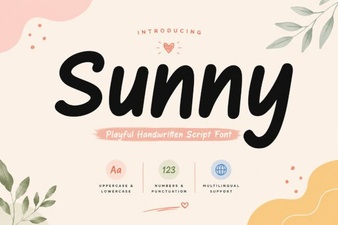 Sunny Font: Bright, Friendly Typography for Creative Projects
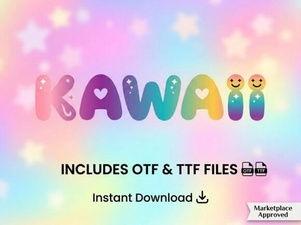 Kawaii Font: Playful & Creative Design Ideas
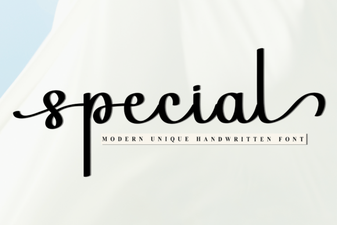 Special Fonts for Creative Design Projects